


September 24, 2026
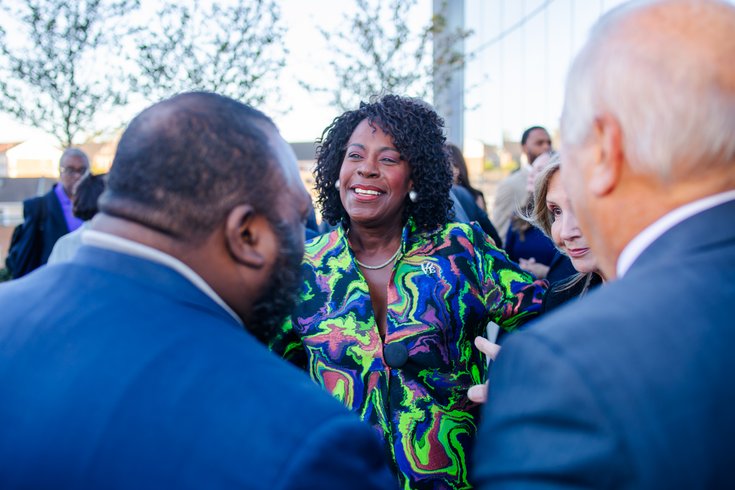 Dominique Johnson/Flickr, City of Philadelphia
Under Mayor Cherelle Parker’s H.O.M.E. initiative, 10 residential blocks are each receiving up to $100,000 for block improvements and beautification projects. Above, Parker appears at the ribbon cutting ceremony for the Children's Hospital of Philadelphia's Morgan Center for Research and Innovation on Sept. 14.
The first 10 residential blocks to each receive $100,000 for aesthetic improvements as part of Philadelphia's Curbside Appeal Program were revealed Wednesday.
The program is a part of Mayor Cherelle Parker's Housing Opportunities Made Easy (H.O.M.E) initiative, a $2 billion effort that aims to build or restore 30,000 housing units during her first term.
MORE: Notice a historical marker is missing? Don't worry, it's likely just under repair
The selected blocks can use the money to replace or trim trees, improve garden beds and plantings, restore lawns, install fences or mend existing ones, clean up vacant lots and other enhancements.
The following blocks were chosen for improvements:
• 1300 South Ruby Street, Kingsessing
• 1700 Saint Paul Street, Nicetown
• 1800 Hart Lane, Kensington
• 2200 South 6th Street, Lovely
• 2500 North Marston Street, North Philadelphia
• 3000 Titan Street, Grays Ferry
• 3200 North Howard Street, Fairhill
• 5000 Newhall Street, Fernhill
• Unit block of Hobart Street, Carroll Park
• Unit block of Wiota Street, Belmont
The funds for each block will be directed to specified program implementers tasked with working with residents to assess block conditions, develop a scope of work and complete the projects, said Jamila Davis, communications supervisor for the city's Department of Planning and Development. The Division of Housing and Community Development will oversee the program.
Residents applied for the inaugural round of funding last spring through their local Neighborhood Advisory Committees or at the City's Neighborhood Community Action Centers. The next round of funding begins next spring.
"Every Philadelphian deserves to live on a block they can be proud of," Parker said in a statement. "The Curbside Appeal Program gives neighbors the resources to come together, improve their surroundings and strengthen the sense of community that makes our city special. This is what One Philly looks like in action."
Since Jan. 1, 2024, the city has built 4,670 housing units and has preserved 11,724 more, bringing the administration to 54.6% of its stated goal, according to a new dashboard that was unveiled Wednesday.
City Council members approved the initiative in June 2025, but later clashed with the administration about whether the program prioritized the city's poorer residents enough. Much of its funding — $800 million — comes from city bonds. The city issued the first half of the $800 million in bonds earlier this year and will issue the remainder in 2027, the Inquirer reported.
Parker's team initially proposed allowing residents who make up to 100% of the area median income, about $119,400 annually for a family of four, to apply for H.O.M.E. programming. Angela Brooks, the city's chief housing and urban development officer, said at the time that 41% of the project approvals are expected to go to households with a 0-31% AMI.
About 55% of the completed preservation projects fall within the 0-30% AMI bracket, according to the city's dashboard. Just under 50% of the 4,670 housing units produced in the first two years of the program fall within 50-80% of the AMI.
The H.O.M.E. initiative's stabilization programs — eviction diversion, mortgage foreclosure prevention, targeted financial assistance and housing counseling — have provided 40,000 services to residents with AMIs of 0-30%. A total of 68,081 services have been provided since Jan. 1, 2024.